This guide explains how to plan a smooth Bank Account Opening, from choosing the right account type to preparing documents, understanding fees, and completing identity checks. It presents objective background on how banks assess risk and onboarding requirements, including common compliance steps, verification timelines, and factors that affect acceptance and usability.

Bank Account Opening is often less about “filling out forms” and more about meeting the institution’s requirements for identity, address, and intended account use. The fastest journeys usually come from setting expectations early: confirm which account type fits your needs, gather the right documents before you visit (or apply online), and review fee schedules so you know the total cost of holding and using the account.
In practice, banks and regulated fintech partners evaluate applicants using a compliance-first onboarding process. That process typically includes identity verification, checks for sanctions/blocked parties, and sometimes questions about the source of funds. While the specific workflow varies by jurisdiction, the underlying logic is consistent: the bank must confirm who you are and understand how the account will be used—so your money can move safely and reliably.
From an industry perspective, “account opening” is an onboarding workflow built on three pillars:
When these pillars are satisfied upfront, banks can approve applications more quickly. When they are incomplete—missing pages, unclear proof of address, mismatched personal details—banks may request additional information or require re-verification.
It also helps to understand that the friction you experience is not just “process.” It is risk management. Every onboarding step reduces the likelihood of fraud (for example, fake identities), reduces compliance risk (for example, dealings with sanctioned individuals), and makes it easier for the bank to support you later (for example, contacting you about account changes, verifying you for service recovery, or complying with legal orders).
That means a smooth experience usually depends less on speed and more on accuracy: entering details exactly as shown on your documents, using readable scans, and providing consistent explanations about your account purpose. If you treat onboarding like a checklist rather than a formality, you often reduce both delays and follow-up questions.
Bank Account Opening begins with fit. An account that appears similar on the surface may differ substantially in fees, transaction limits, card availability, and reporting. If you open the “wrong” account type, you may later face higher maintenance costs, fewer affordable transactions, or a less convenient cash/transfer experience.
Consider these practical dimensions:
Many people think account selection only impacts money costs. In reality, it can affect the onboarding path. Some banks are stricter about certain high-activity account types, cross-border capabilities, or products that are considered higher risk. While you can’t control how a bank evaluates you, you can reduce confusion by choosing an account that matches your planned use from the start.
For objective context on bank fee transparency and disclosure expectations, readers can also refer to general consumer-protection frameworks published by regulators such as the Consumer Financial Protection Bureau (CFPB) in the United States, and equivalents in other countries.
Although requirements vary by bank and location, a typical Bank Account Opening document set includes:
To avoid delays, ensure that your documents match the information you enter: name spelling, date formats, address formatting, and document expiration. Even minor inconsistencies can trigger a manual review. In day-to-day terms, banks often rely on exact field matching: if your identity document lists “Robert James Smith” and your application lists “Rob Smith,” you may be asked to provide additional clarification or supporting evidence.
Document quality matters too. Many online onboarding systems can reject files that are blurry, cropped, or low-resolution. If you’re scanning your documents, avoid shadows and ensure the entire document is visible, including edges and any machine-readable zone. For proof of address, make sure the document displays your name and address clearly. If you receive a statement in a digital format, verify that it can be downloaded as a PDF that preserves readability.
It’s also helpful to prepare for the “recency window.” Proof of address typically must be recent—commonly within a range like 1–3 months (but this varies by provider). If your proof of address is older, consider obtaining a newer eligible document before you apply. Waiting to apply until your paperwork is within the acceptable date range can save multiple days.
Finally, keep a backup plan for online verification failures. If your selfie verification fails, your document scan is unreadable, or your identity check can’t complete due to technical reasons, you may still be able to finish the process by visiting a branch or contacting support. Knowing that alternative ahead of time reduces stress and helps you complete onboarding even if the first submission doesn’t go through.
Banks operate under regulatory requirements designed to prevent fraud, money laundering, and terrorist financing. This typically results in onboarding checks such as:
These measures are standard across the industry and are often described in high-level terms within bank onboarding disclosures. For a reliable overview of how banks approach anti-money laundering frameworks, readers can consult resources from bodies such as the Financial Action Task Force (FATF)—an international standard setter.
To make the process feel more predictable, it can help to understand what “risk indicators” may look like in practice. They are not necessarily about wrongdoing; they can be about uncertainty. For example, if your application states you will receive salary deposits but your employment details do not align with the expected inflow pattern, the bank may ask clarifying questions. Or if your planned activity suggests a cross-border flow but you did not provide enough context about counterparties or transfer purpose, the bank may request additional explanation.
Similarly, watchlist screening does not always mean you are “blocked.” Name matching can produce false positives—especially when names are common or when spelling differs between countries. If you are flagged due to similarity, the bank may request extra verification steps, such as additional identity documents or confirmation details. Preparing documents in advance and responding promptly improves the chance of resolution without rejection.
Also note that compliance checks can happen at different stages. Some checks are completed instantly during online onboarding, while others may be run after submission. If you receive a message requesting more information after you apply, treat it as part of the process rather than a failure. Timely responses often determine whether you complete onboarding quickly or experience prolonged review.
Even when banks market low account fees, the practical cost is determined by how you use the account. Some customers are surprised by charges that arise from activity rather than maintenance. Before you commit, review:
Because the user request included no specific prices or supplier/bank names, this article intentionally avoids quoting unverifiable numbers. Instead, it provides a framework you can use to evaluate pricing sheets and service terms provided by your chosen institution.
To evaluate fees effectively, think in “scenarios.” Instead of trying to understand the entire fee schedule at once, list the actions you expect to take over a typical month or year. For example:
Also watch for “conditional fees.” These are charges that apply only if a certain condition is met, such as:
Conditional fees can be easy to miss when you only read the account homepage. A quick method is to search the fee sheet for terms like “if,” “where,” “subject to,” “may apply,” and “additional.”
Finally, consider non-fee costs. A bank account can also have costs like time spent troubleshooting failed transfers, extra time verifying card delivery, or inconvenience if customer support hours don’t match your needs. Those aren’t listed as fees, but they matter for “total cost” in a practical sense.
In very Bank Account Opening journeys, the “supplier” is the regulated bank or an authorized financial institution that will hold your deposits. In addition, there may be supporting service providers:
From a customer perspective, the key question is not just “who owns the service,” but also “what approvals and responsibilities apply.” Read the disclosures that explain which entity is responsible for account operations, dispute handling, and data processing.
Supplier details can also affect how support works. If there is a dispute—like a transfer error or a card transaction you don’t recognize—the resolution process may involve multiple parties. Some institutions handle everything directly, while others coordinate with external partners. Understanding these relationships upfront helps you know where to contact, what evidence to prepare, and how long disputes may take.
When onboarding uses a third-party identity verification service, the bank may process your images and match them against your identity document data. If you are concerned about privacy, look for the privacy policy sections that describe how long data is retained, whether it’s shared, and whether you can request deletion or correction depending on local law.
Another “ecosystem” element is the relationship between the account and the payment rails available in your region. Some banks support specific transfer networks more smoothly than others. When you plan transfers—especially international transfers—verify the supported routes, typical transfer timeframes, and whether recipient banks might charge intermediary fees not shown in your bank’s fee schedule.
Below is a practical sequence you can follow to reduce friction. While your specific institution may differ, this order reflects typical bank onboarding patterns.
To expand on each step, it helps to think about the “data you will be asked to provide” and the “evidence that supports it.” When you apply, the bank is effectively trying to connect three things:
If any link is weak, the onboarding process may extend. Your goal is to ensure each link is strong at the moment you submit. For example, if you plan to use the account for salary deposits, be ready to provide information consistent with that purpose. If you plan to use the account for savings, make sure the planned inflow/outflow pattern doesn’t conflict with stated goals.
Even when applicants are eligible, approval speed and final approval can depend on conditions such as:
There are also everyday issues that slow approval but are easy to prevent. Examples include:
If you’re applying online, avoid submitting repeatedly without fixing the underlying issue. Some systems treat repeated failed submissions as a new risk event, or they trigger additional manual checks. Instead, if you notice a likely mismatch, pause and correct it before resubmitting.
The table below is a structured way to compare what banks commonly ask for during Bank Account Opening. Requirements differ by country and institution; use it to prepare and cross-check with your selected provider’s checklist.
| Requirement category | Typical example | Why it matters | Common pitfall |
|---|---|---|---|
| Identity verification | Passport or national ID | Establishes who you are under regulated onboarding rules | Expired ID or unclear photo/scan |
| Proof of address | Utility bill, lease letter, recent statement | Confirms residency and supports account communication | Document too old or address format doesn’t match |
| Contact details | Email and mobile number | Enables authentication and security alerts | Number entered incorrectly, causing login/verification failures |
| Tax/residency identifiers | Local tax number or equivalent (when required) | Supports regulatory reporting obligations | Omitting fields or entering a placeholder incorrectly |
| Account purpose and activity | Spending/savings/international transfers | Helps align services with monitoring and risk controls | Stating an intent that conflicts with typical usage patterns |
| Source of funds (case-dependent) | Explanation of expected inflows | May be requested under enhanced due diligence | Vague or inconsistent descriptions |
To make the table even more useful, add your own internal notes next to each row. For instance, write down what document you plan to use for proof of address and when it was issued. Record where you can find your tax number in your local documents. This turns onboarding preparation into something you can complete in one sitting, instead of re-checking details later.
Objectively, banks follow a regulated playbook for onboarding. Global standards emphasize risk-based approaches, meaning the intensity of checks increases when a case is higher-risk. This is reflected in widely cited frameworks such as FATF guidance on risk-based approaches to anti-money laundering and counter-terrorist financing.
Many jurisdictions also require banks to implement robust customer due diligence and ongoing monitoring. As a result, the onboarding experience can include a sequence of checks—some automated, some manual. That blend is intentional: automation improves consistency and speed, while human review handles exceptions and ambiguous cases.
For a deeper understanding of why banks ask for identity and address information, you can review high-level regulatory explanations from official bodies in your region. When reading such sources, prioritize official publications and guidance notes, rather than anecdotal summaries, to avoid misinformation.
Ongoing monitoring is another element worth mentioning. Even after you complete Bank Account Opening, banks may monitor transactions and account behavior against the profile they established during onboarding. If your actual activity later deviates heavily from what you declared—such as sudden large transfers, frequent international payments, or unusual counterparties—the bank may request additional documentation. This is not always a negative outcome; it is often part of standard compliance.
To reduce surprises, aim for “consistency” between your declared activity and your real activity. If you expect a change in your financial pattern (for example, you’re starting a new business), it’s better to communicate appropriately as soon as the bank requests updates rather than waiting until delays occur.
Online verification often involves document upload and sometimes a selfie or video liveness check. Here are practical tips that help reduce failures and subsequent manual review.
If the system returns an error, don’t immediately blame yourself. Some issues are technical (upload size limits, camera permission problems, or temporary verification outages). When that happens, refreshing the attempt later or using another device can resolve the issue. If the bank provides support contact, mention the time of submission and the error message (if shown) to help them troubleshoot faster.
Also consider your device environment. Some verification steps require stable internet. Try to submit using Wi-Fi if your mobile data is unstable, and avoid public networks when privacy is a concern.
Completing Bank Account Opening does not always mean you can immediately do every activity. Activation may require additional steps.
After approval, you might need to:
Funding the account is the next milestone. Banks usually provide transfer instructions such as account details or IBAN-like identifiers. If you’re funding by transfer, follow instructions exactly—especially reference fields. A small error in a reference can delay your deposit, or it can cause the funds to appear as unallocated, requiring later reconciliation.
Once funds arrive, “test key services” as the earlier step suggests. A safe testing approach includes:
These small tests can catch problems early. For example, you might discover that certain transfers require additional verification, or that a new payee needs approval. Discovering it early helps you avoid delays when you need to pay something urgent.
While forms vary by bank, the questions tend to cluster around a few themes. Being prepared can reduce errors and follow-up requests.
Typical question categories include:
How to answer carefully:
If the form provides examples, follow them. Banks often train onboarding systems and reviewers to recognize patterns. When you align your answer with the categories the system expects, you reduce the chance of manual review.
Sometimes documents are correct, but approval still takes longer. This can happen due to several non-document reasons.
If you experience delays, the best response is usually to monitor your email/SMS for requests and respond quickly. If you have the option, check your application status page and ensure your contact information is correct. Delays often occur because the bank cannot reach you for follow-up, not because they have decided to reject you.
The fastest path is preparation: choose the correct account type, gather a valid identity document and proof of address that match your entered details, review fee disclosures in advance, and respond quickly to any follow-up verification requests.
In addition, use the correct “channel” if your documents are slightly complex. If you anticipate an online system might struggle with a certain document (for instance, a passport with unusual formatting or a proof of address in a less common format), submitting in person may reduce the number of back-and-forth steps. The “fastest” option depends on how compatible your paperwork is with the selected verification method.
Many institutions support online onboarding. Typically, you’ll upload documents and complete identity verification through an automated process (and sometimes a manual review). If the system can’t confirm your details, you may be asked to visit a branch or provide additional documentation.
Before you start, confirm what the bank means by “online onboarding.” Some banks allow online application but still require an in-person visit for final identity verification. If you plan to travel soon or have limited availability, you may prefer a provider with fully remote verification if it’s available.
Common reasons include mismatched information between your application and documents, unreadable uploads, proof of address not meeting the required format or recency, or additional compliance checks triggered by risk controls.
Additional documentation can also be requested when the bank needs to clarify account purpose. For example, if you indicate that you will receive salary, but your stated inflow appears inconsistent with the declared income category, the bank might ask for employment confirmation or other evidence. If this happens, respond with the most direct documents available rather than submitting a long list of unrelated files.
In well-regulated environments, institutions provide fee disclosures and account terms before or during onboarding. However, customers should still review the fee schedule carefully—some costs appear based on activity (transfers, ATM use, or card-related charges).
To protect yourself from surprises, look for the part of the fee schedule that covers “periodic fees” and also the part that covers “event-based fees.” If you only read the maintenance fee section, you might miss fees for returned items, foreign currency conversion, or overdraft-related charges.
Correct the application entry to match the proof of address whenever possible. If you recently moved and the document reflects an older address, consider using an eligible proof of address that fits the bank’s requirements, or contact customer support for the acceptable alternatives.
If you cannot obtain a document that matches exactly, ask support what they accept. Some banks may accept a combination of documents (for example, lease agreement plus a letter showing your name at the address). But acceptance is bank-specific, so confirm rather than guess.
For very basic deposit accounts, opening the account does not function like a credit inquiry. Still, the exact impact depends on local regulations and the type of product. If the bank also offers credit facilities (credit cards/overdraft), separate credit checks may apply for those features.
Also note that some financial products—like overdraft lines or credit cards—are evaluated differently. If your priority is avoiding credit checks, choose a deposit-only account and add credit features later only if needed.
Timelines vary by institution, verification method, and the need for manual review. If identity checks are straightforward, approval can be quick; if documents require clarification or additional compliance steps are triggered, processing may take longer.
When the timeline matters (for example, you need an account for a salary start date), apply with buffer time. If you apply at the last minute, any manual review can push activation beyond your deadline. Even a day or two of buffer can make a big difference.
Banks commonly ask about your intended use—such as everyday transactions, savings behavior, and whether you’ll receive salary or make transfers. This information helps the bank align services with risk-based monitoring expectations.
When filling out account-use details, try to answer in a way that matches your lifestyle and your realistic plan. If you’re unsure about your exact monthly activity, choose the closest range and be ready to update later if the bank requests changes.
Often yes, but account switching may require closing an account, opening a new one, and updating payment instructions. Because fees and account features can differ, compare terms before changing products.
When switching, don’t forget indirect consequences like changes to card availability, bill-pay behavior, and whether your new account offers the same transfer speed or ATM network. Make the switch methodically: update key payees first, then transfer balances, then verify everything works.
Rejections can occur for compliance or eligibility reasons. You can usually request clarification through the bank’s complaints or support process, and then reapply if you can address the underlying issue (for example, updating documents or correcting mismatched details).
If you receive a rejection, keep your documentation organized and ask for a clear list of what to fix. Reapplying without addressing the reason can lead to repeated rejection. In some cases, the bank may keep a record and you might need to wait before reapplying depending on local policy.
One of the easiest ways to prevent delays is to create a readiness pack before you begin. This is a simple approach used by many people who open accounts frequently (for example, renters who move often, students who change enrollment, or individuals who relocate between countries). While the exact documents differ, a readiness pack typically includes everything you might need in one folder—digital and physical—so you can respond quickly if the bank requests more information.
Consider organizing your pack into these groups:
How does this help? When the bank asks a follow-up question, you avoid the most common failure mode: scrambling to find documents that match what you entered. Instead, you can answer quickly and consistently.
If you prefer a more systematic approach, you can create a “data matching” checklist. Write down the exact values from your identity document and proof of address:
Then, when you enter information into the application, copy those exact values. This reduces typos and mismatches dramatically.
Source of funds questions can be intimidating, especially for applicants who are not used to compliance processes. In most cases, the purpose is straightforward: the bank needs to understand how money will enter the account so it can monitor activity responsibly and comply with regulations.
“Source of funds” is often about the origin of the specific money expected to flow through the account. It might be employment income, business revenue, pension payments, savings transfers, rental income, or proceeds from selling an asset. The bank may also ask about whether the inflows are regular or occasional and whether they align with your stated account purpose.
If you are asked about source of funds, a helpful principle is to answer at the level of the form. If the bank wants a category, provide a category. If it wants a short explanation, keep it short and consistent. If the bank asks for documentation in later steps, be ready to provide it.
For applicants who are self-employed or have variable income, consistency matters more than exact numbers. For example, if you explain that income varies monthly and provide realistic expected ranges, the bank can treat your case as a known pattern rather than a mystery. If you provide an answer that seems unlikely (for example, claiming regular salary inflows that don’t appear consistent), the bank may request more proof.
Although the onboarding process is the focus of Bank Account Opening, it’s wise to consider what happens after activation. Some accounts experience holds or limitations if activity triggers compliance checks. You can reduce the likelihood of this by setting yourself up to be “compliance friendly” from the start.
Practical steps include:
Some people worry that these measures are about distrust. In reality, transaction monitoring is designed to protect both the customer and the institution. It can also protect you from scenarios like mistakenly receiving fraudulent transfers into your account.
Bank Account Opening succeeds when you approach it with structure: select the right account type, verify document quality and consistency, understand fee schedules, and expect identity/compliance checks that reflect industry standards. Rather than rushing through the form, invest a short amount of time upfront—this reduces delays and helps ensure your account is activated with the services you actually need.
If you share your preferred account purpose (everyday spending, salary deposits, savings, or international transfers) and the general region you’re applying from (no personal details required), I can help you draft an application checklist tailored to your situation.
Striking the Perfect Balance: Navigating Premiums and Out-of-Pocket Expenses in Senior Insurance Plans

Explore the Tranquil Bliss of Idyllic Rural Retreats

How to Make Lasting Memories at Disneyland Attractions

4rkojvsx Technology: Industry Insights and Buying Guide

Affordable Phones and Plans for Seniors

Affordable Full Mouth Dental Implants Near You

Unlock the Top Kept Secrets to Finding Your Ideal Dentist for Flawless Dental Implant Results!

Discovering Springdale Estates

Unveiling RS Sul Telecom Services


How to Open a Bank Account: A Practical Guide
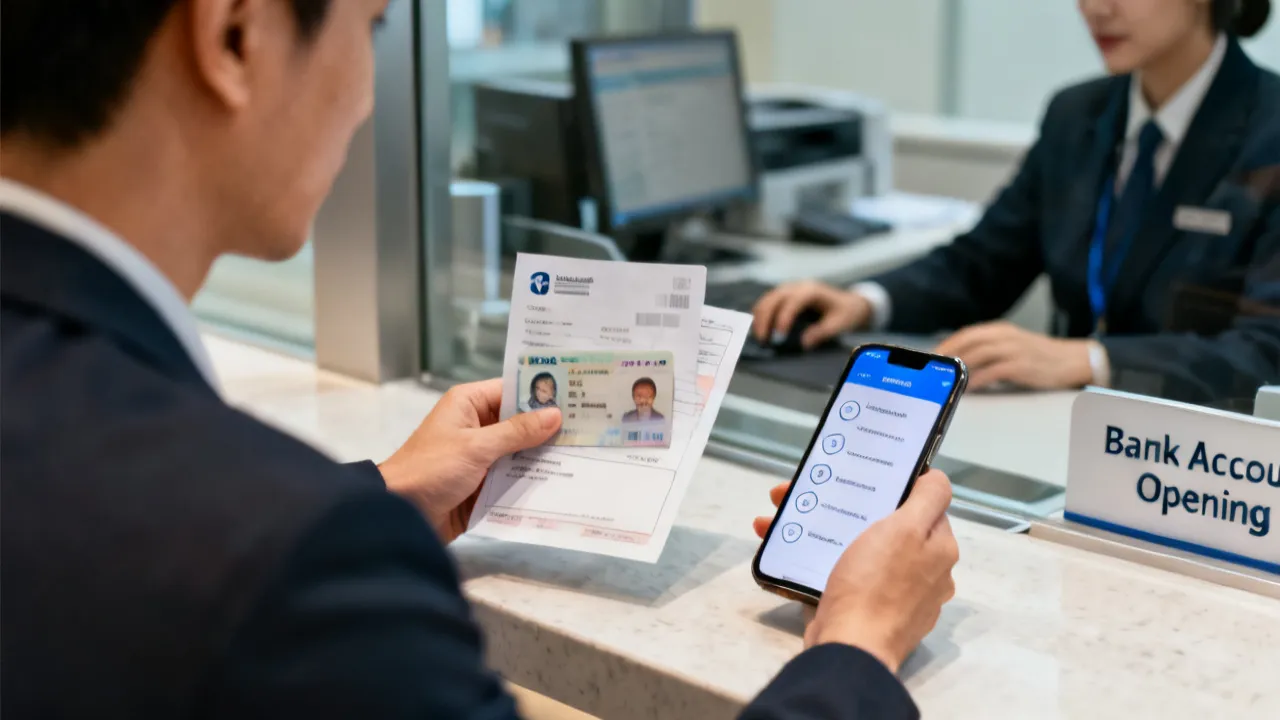
This guide explains how to complete Bank Account Opening efficiently, what documents you typically need, and how fees and account features compare. It provides objective background on why KYC checks, account type selection, and access channels matter, then offers a step-by-step framework, clear conditions, and FAQs to support confident decision-making.
A Practical Guide to Bank Account Opening
This guide explains how to handle bank account opening with a focus on eligibility checks, document readiness, and the practical choices that affect account suitability. Background sections outline what banks assess, how account types differ, and why compliance steps matter. Readers can compare requirements, follow a clear process, and review FAQs to reduce delays during onboarding.
How to Approach Bank Account Opening
This guide explains how to plan bank account opening with clear, objective considerations before you apply. It outlines what banks typically assess, how fees and account features affect choices, and what documents are commonly required. Then it provides a comparison-style supplement and step-by-step guidance focused on responsible decision-making.

How to Complete Bank Account Opening Efficiently
This guide explains how to complete bank account opening efficiently, from preparing documents to choosing the right account type and understanding fees. Background information covers what “Bank Account Opening” typically involves across regulated financial institutions, the role of identity verification, and common compliance steps used to protect customers and reduce fraud risk.
Comprehensive Guide to Bank Account Opening
This guide explains the practical process of Bank Account Opening, from eligibility and documentation to account types and approval timelines. It also outlines key risk checks, fees to verify, and how suppliers and institutions typically structure onboarding. Background information is provided objectively to help you compare options and prepare correctly before you apply.
How to Prepare for Bank Account Opening
This guide explains how to plan a smooth Bank Account Opening, from choosing the right account type to preparing documents, understanding fees, and completing identity checks. It presents objective background on how banks assess risk and onboarding requirements, including common compliance steps, verification timelines, and factors that affect acceptance and usability.
